
When the Renters’ Rights Act came into force on 1st May 2026, there was an un-easy concern across the buy-to-let sector. It was the biggest change to the industry in many years, and many landlords worried that increased regulation would weaken the market, reduce rental growth and encourage investors to exit altogether.
While it’s still early days, the first major rental market report since the legislation was introduced paints a much more reassuring picture.
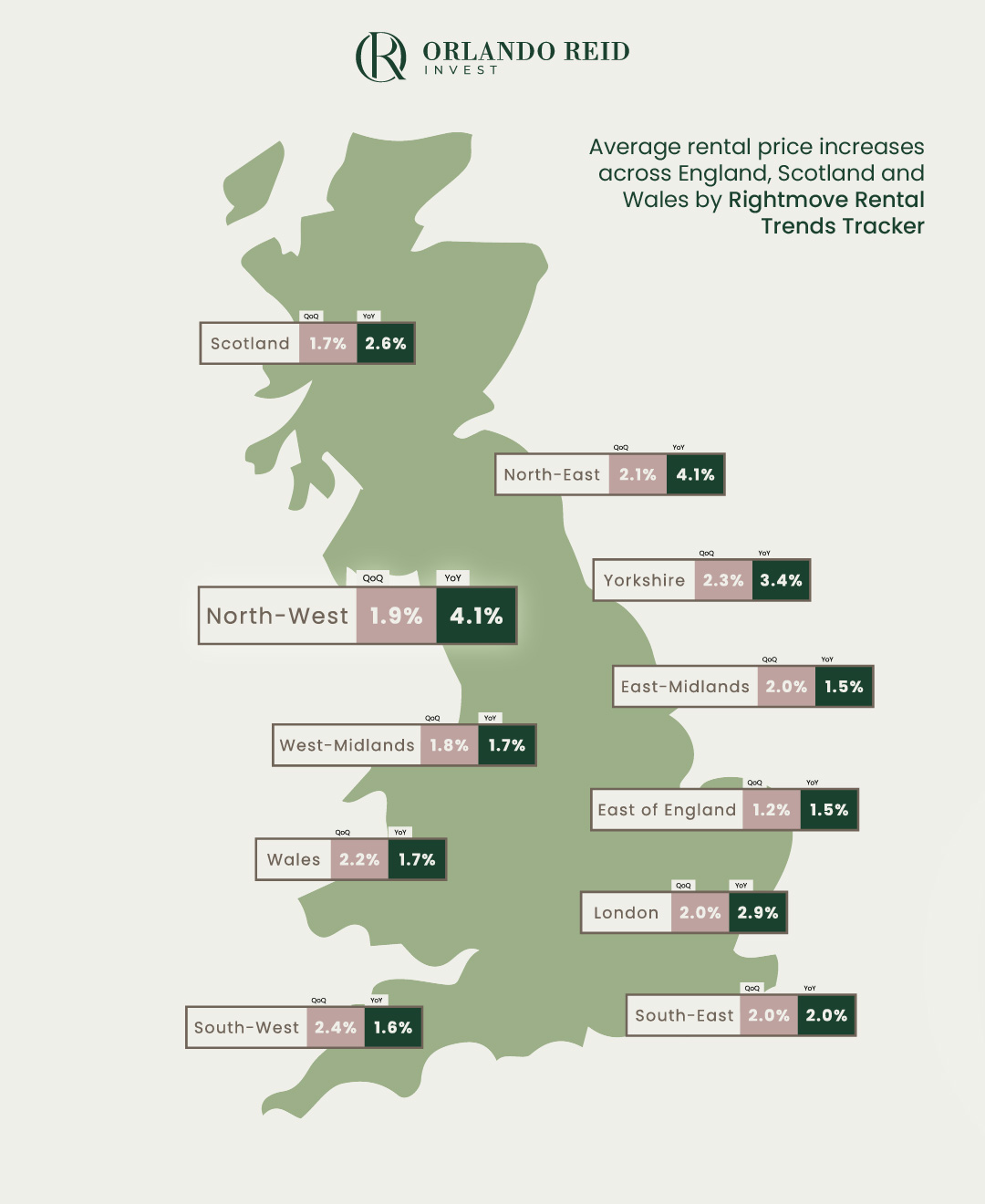
Rightmove’s Q2 2026 Rental Trends Tracker suggests that the UK rental market has remained remarkably resilient, with rental prices continuing to rise across every single region of the country.
Market Data Stronger Than Ever
The latest report shows that every single region recorded positive annual and quarterly rental growth over the second quarter of 2026.
For the first time in quite a while, there are no regional markets experiencing rental decline. Despite one of the biggest legislative changes to England’s private rented sector in decades, tenant demand continues to outstrip supply in many locations, keeping upward pressure on rents.
Rather than causing disruption, the market appears to have absorbed the changes with relatively little impact on overall performance.
The North West Continues to Lead
While every region has seen rents increase, one area continues its pattern of outperforming the rest. The North West recorded annual rental growth of 4.1% – more than double the growth seen across several southern regions.
This isn’t a one-off. The North West has consistently outperformed much of the country over recent years thanks to a combination of:
- Strong employment growth
- Ongoing regeneration across major cities
- Excellent affordability compared to the South
- Growing student and graduate retention
- A continued shortage of quality rental homes
Manchester, in particular, continues to benefit from billions of pounds of investment, expanding employment sectors and one of the fastest-growing city centre populations in Europe. This is what continues to build long-term rental demand, and in turn, improve investment prospects.
What About the Renters’ Rights Act?
Ahead of the legislation, many predicted that landlords would leave the market in large numbers, creating uncertainty for investors.
While some landlords inevitably have chosen to sell, the evidence so far suggests the Act hasn’t triggered the dramatic market slowdown which many had feared. Recent analysis even indicates landlord purchases have outpaced sales for the first time in several years, suggesting confidence is returning to the sector.
Instead, the biggest challenge remains exactly what it was before the legislation arrived:
There simply aren’t enough rental properties to meet demand.
That’s what causes rental growth across the UK.
Supply Still Drives Performance
This data simply reinforces a trend we’ve been talking about for years.
Rental demand may have normalised from the extraordinary levels seen after the pandemic, but available stock remains well below historic norms. With fewer homes available to rent, landlords continue to benefit from healthy occupancy levels and stable rental growth.
For investors, that’s arguably a far more important driver than short-term legislative changes.
Property markets are ultimately controlled by supply and demand – and right now, demand continues to exceed supply across much of the country.
What This Means for Investors
The first post-Renters’ Rights Act data should provide reassurance for landlords who were concerned about the future of the sector. The legislation hasn’t halted rental growth, it hasn’t weakened tenant demand.
While regulation will continue to evolve, successful property investment has always been about choosing the right properties, in the right locations, with the right management.
If anything, the latest figures reinforce what many investors already knew: the UK’s rental market remains resilient, and the North West continues to be one of its strongest-performing regions.


