
Earlier in 2026, we saw the introduction of the Renters’ Rights Act in the UK. This brought some of the biggest changes to the rental sector in decades, including monitoring market rates, switching to rolling tenancies, and putting an end to blanket bans.
We were also notified that further changes were coming, with the UK government announcing further details on Wednesday 9th September. All rental properties and landlords will now need to be registered.
What is the Renters’ Rights Act?
Officially coming into action on 1st May 2026, the Renters’ Rights Act aims to give tenants more security, stability and fairness in the housing market. The new rules introduced were:
- Removal of ‘No-Fault Evictions’ (Section 21)
- No more fixed-term tenancies
- Rent increases limited to one per 12 months
- No offers over asking rent
- No rent paid upfront
- No discrimination based on pets, children or government benefits
What is the PRS Landlord Database?
The ‘Register your rental property’ scheme will create a national record of rented properties, helping councils to identify and tackle landlords who aren’t complying with housing laws.
If you’re a landlord, you’ll need to register yourself and each property you rent out. There is an annual cost of £65 per property, which will need to be renewed each year. Failing to register a property will put you at risk of being fined up to £7,000 initially, and up to £40,000 for repeat offences.
You don’t need to register if you’re a landlord of supported exempt accommodation.
When and how to register
The database will be rolled out region-by-region, with the first registrations opening on 15th December 2026. Each region will have three months to register their properties.
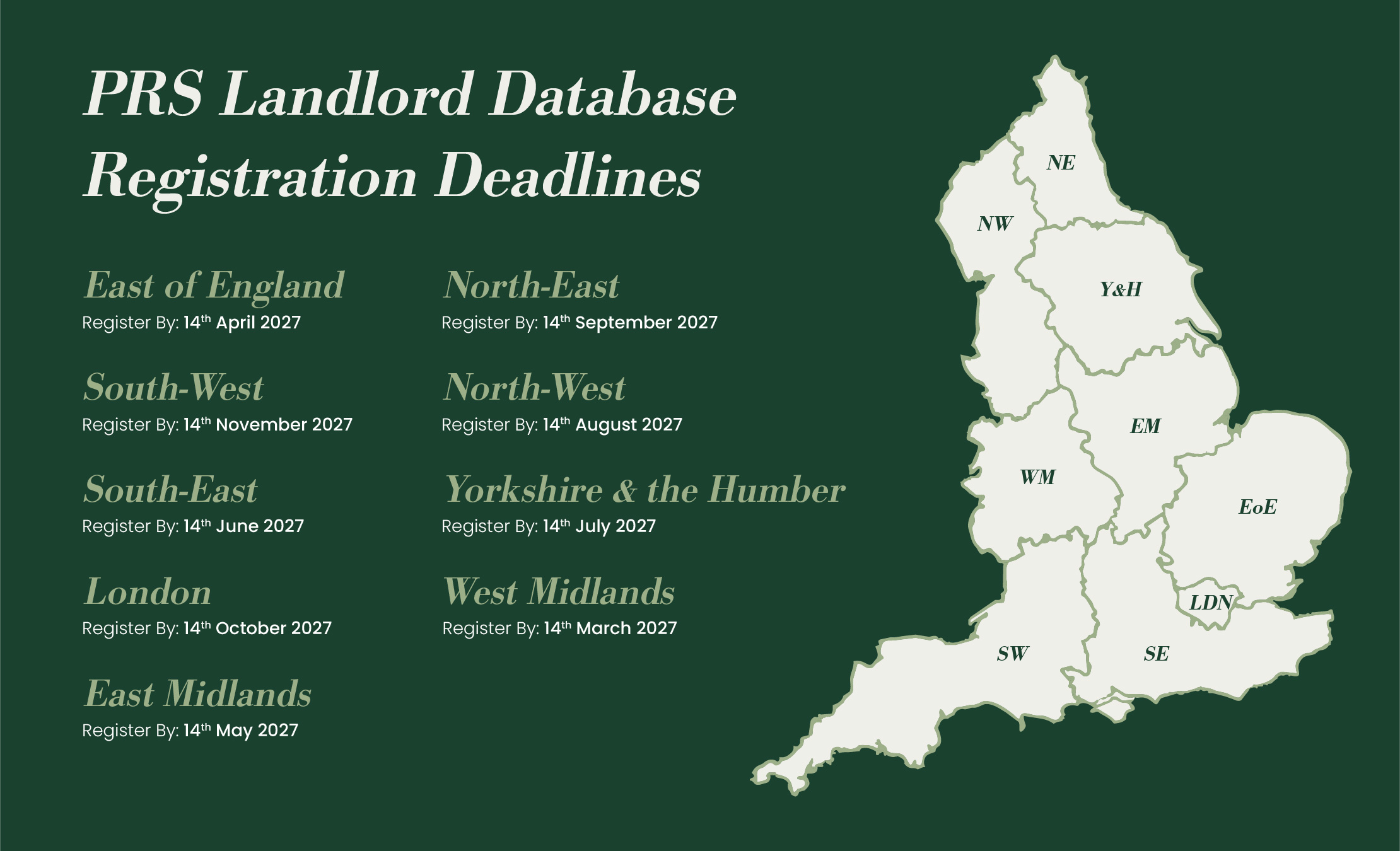
You’ll be able to register your property online once it opens within the region where your property is located. There will also be an offline service available for those who need it.
What information do I need to give?
For individual landlords, you’ll need to provide:
Your personal details – name, date of birth, address, phone number and email.
Property details – address, ownership type, property type, number of bedrooms, whether the property is currently let, and any relevant health and safety information and certificates.
Tenancy information – number of occupants and households, whether the property is a HMO, and whether the property is furnished, partially furnished or unfurnished.
Rent information – how much rent is charged, frequency of payments, and whether it is inclusive of utilities.
You can find a comprehensive list of the information required here.
What does this mean for landlords?
For landlords, the new database adds another step to managing a rental property, with registration becoming a requirement across the UK. It’s important to be aware of when your region opens for registration and to make sure you have the required information ready.
If you use a property management service, your agent should also be able to help you understand what these changes mean for your properties and ensure you’re prepared for the upcoming requirements.


